
Multi-injection access port therapy
Discreet and targeted diabetes management.
A delivery mode designed for comfort.
Multi-injection therapy involves administering insulin via several daily injections. By using a subcutaneous access port it is possible to simplify this routine, reducing the number of times it is necessary to puncture the skin everyday and improving the patient's quality of life.
How multi-injection port therapy works
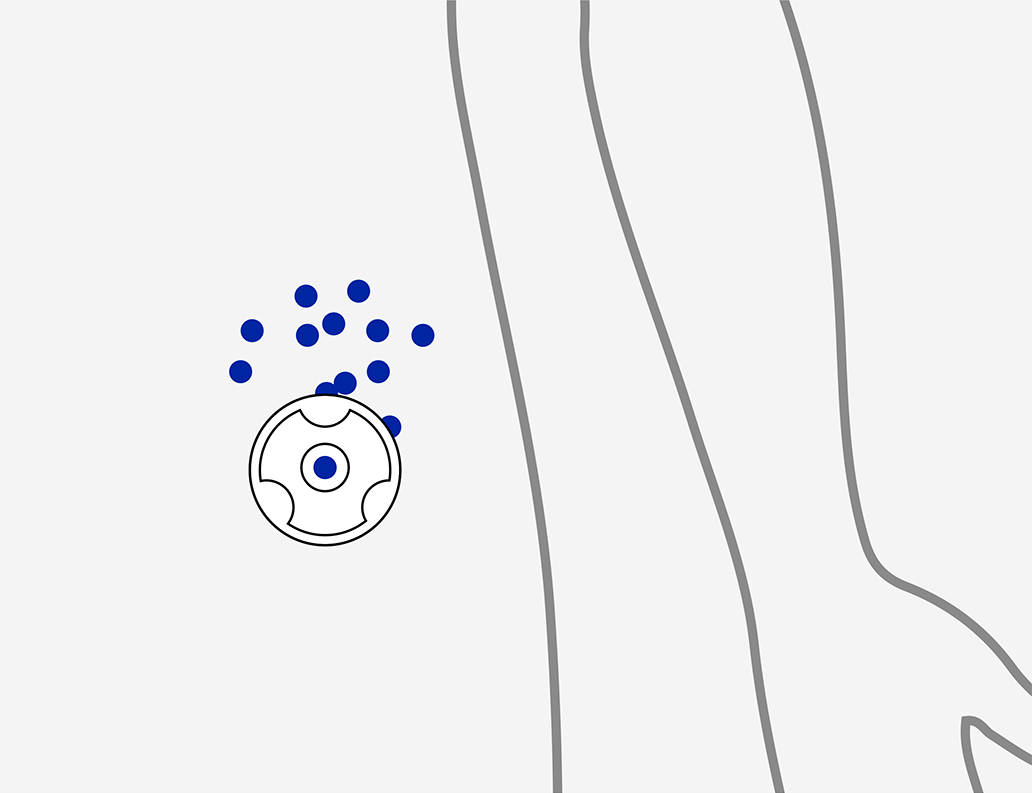
Multi-injection port therapy involves using a small device applied via an adhesive to the skin, know as a 'port' (or subcutaneous access port). This port allows insulin to be administered through multiple daily injections, without having to puncture the skin each time. When administering an injection, the insulin pen needle enters the port and not the skin, rendering the procedure less painful and more comfortable, especially for people with diabetes who need several injections everyday.
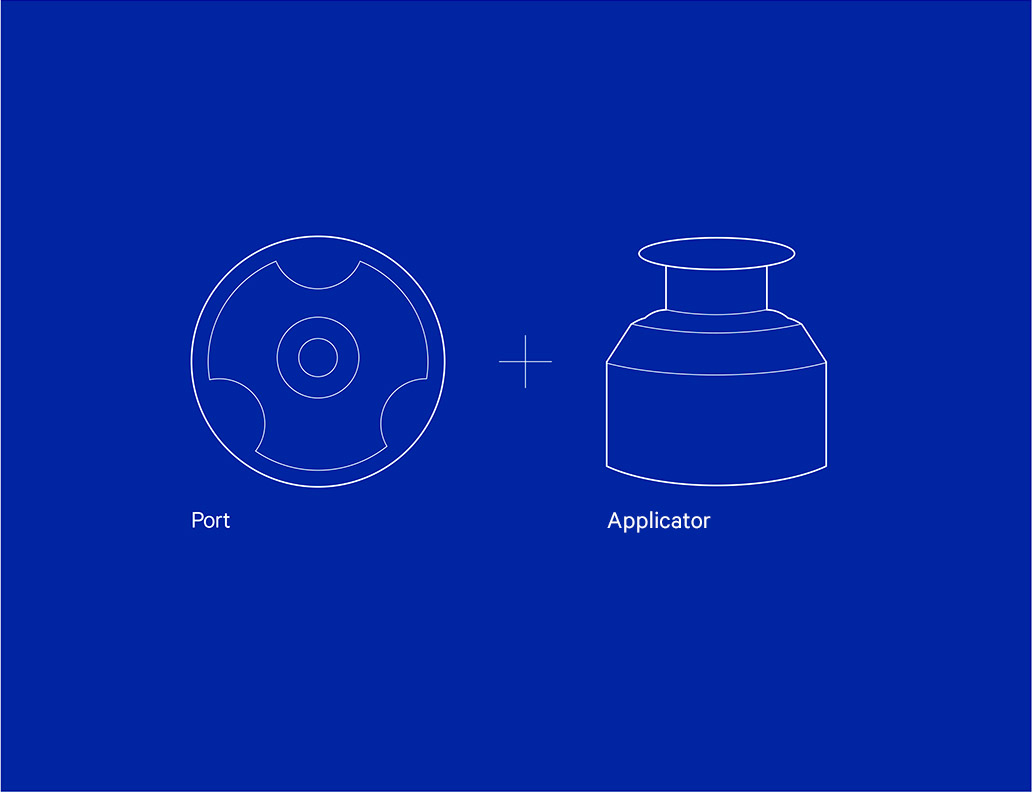
The components.
- An access port or subcutaneous insulin injections.
- An applicator for automatic, simple, and painless port insertion.
Simplify your routine.
1
Fewer daily injections: the device administers insulin via the same access point over a period of several days, without having to repeat the injection directly via the skin.
2
Greater therapeutic adherence: thanks to the reduced physical discomfort, many patients tend to be more regular with their insulin administrations.
3
Discretion and freedom: the port is barely visible and allows for greater discretion, especially in social and work contexts.
The value of a tailor-made choice.
Multi-injection port therapy represents an effective and less invasive option
for many people with diabetes. It enables patients to simplify day-to-day management
of diabetes while maintaining effective control over their therapy.
Sources
- Burdick et al. 2009. "Use of a subcutaneous injection port to improve glycemic control in children with type 1 diabetes"
- Maltoni et al. 2018- "Using an injection port helps improve metabolic control and compliance to a strict basal-bolus regimen in children and adolescents with type 1 diabetes"
- International Society for Pediatric and Adolescent Diabetes Clinical Practice Consensus Guidelines 2024
- Khan et al. 2018. "Benefits of Using the i-Port System on Insulin-Treated Patients"